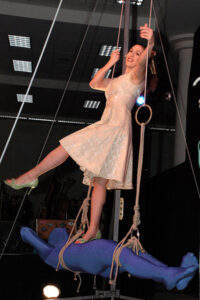
What I Wish People Understood About BDSM

By Emma Michelle Dixon, Ph.D.

BDSM is the acronym people use to refer to a whole variety of erotic practices involving dominance, submission, other forms of roleplay and more. Specifically: the B and D refer to bondage and discipline, and S and M to sadism and masochism. BDSM has attracted a great deal of mainstream interest since 50 Shades of Grey hit the screens. However, there is some woeful misunderstanding about what it is and isn’t.

The misunderstanding that BDSM is necessarily linked to violence or portrayed as acting against someone’s will is dangerous, as it doesn’t account for the interpersonal dynamics that make BDSM a consensual practice. And many people are unaware of the playful, consciousness-expanding, and even healing opportunities that BDSM offers. From my coaching work with clients, and from exploring my own identity as a sex-positive woman, I know that BDSM can do a lot more than just add a bit of fun to an otherwise routine roll in the hay.

Here are five things I wish more people understood about BDSM:

1. Fundamentally, BDSM is about sensation and power play.

Many don’t realize it, but BDSM is by its nature not even about “conventional” sex (i.e. involving genitals) — although it often includes play that is erotic. As you may have assumed, BDSM often includes pain (particularly pain-as-play), but it has also come a long way in recent years, and incorporates a vast number of practices that aren’t always explicitly about sex.

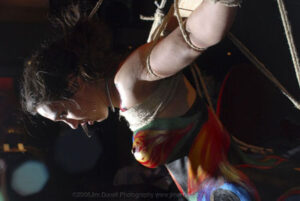
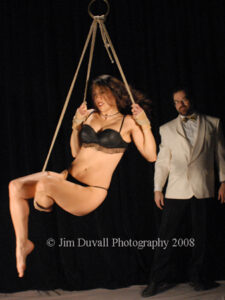
Sensation is often explored via impact play (such as flogging, spanking, etc.), pushing boundaries around play and pleasure, restraint, blindfolds, and objects. Power dynamics are explored through role play, such as one partner being submissive (bottom) and the other dominant (top). The words “bottom” and “top” refer to sex positions on a literal level; though these identities can also be explored psychologically. BDSM can also be as simple as playing with rope, or as complicated as a drawn out “scene” with lots of props and a scenario that participants act out.

2. You MUST have consent and safety for BDSM.

Consent and an in-depth discussion of boundaries and physical safety are the absolute hallmarks of BDSM. Safety — physical and psychological — is what allows BDSM to be everything it can be: fun, consciousness-shifting, and even healing (see below).

If you’re new to BDSM, or exploring it for the first time with a new partner, it’s absolutely necessary to discuss what you want, what you don’t want, how you will communicate “slow down” or “stop” in the heat of the moment, and how you will do “aftercare” to process it all later. This also means that you must know the signs of physical distress if you’re playing with intense sensation.

If you are not given a choice about your part in the dynamic, steer clear. It’s especially important when watching or reading fictional depictions of BDSM to understand that consent marks the unambiguous boundary between erotic play and non-consensual abuse. For this reason, it’s not advisable to dive into BDSM with strangers!

3. It can be playful!

If you’ve ever watched children play, you know that from our earliest years, we humans are drawn to exploring boundaries and roles that involve power: goodies versus baddies, cops and robbers and so on. In adulthood, we have even more options to explore this concept. Eroticism and power play happen to be a good fit.

Likewise, sensation can be an endless source of enjoyable exploration. Not to mention, exploring fantasies with a trusted partner (with discussion and consent) can be wildly entertaining! Even better is the underlying foundation of vulnerability that BDSM requires; the trust that you and your partner build from exploring these new dynamics leads to deep bonding.

4. It can be consciousness-expanding.

As sexuality educator Barbara Carellas emphasizes in her book Urban Tantra, BDSM is, like Tantra, a means of exploring consciousness. Sensation, like impact play or bondage, can leave you feeling that you are out of your body and even connected to something greater.

Surrender is so key to experiencing an expansion of consciousness. So, similarly, the experience of being submissive and just “accepting” can also lead one into an altered state. When you feel safe, and surrender, there are many ways to sink, slip, or expand into the beyond.

5. It can be healing.

Exploring sensation and power is much like a dynamic psychodrama, and one which can lead to self-realization and healing. For example, to finally take the reins of power if you have felt victimized, or to surrender if you are always in control — can be revealing and releasing.

If things go awry, and there is some kind of upset, the compassionate partner who respects boundaries can assume the role of healer. Even the most dominant, flogging, handcuff-wielding pro knows the importance of the well-timed cuddle. All the more reason to take consent and safety seriously from the beginning.

Above all, there is a reason BDSM has been central to the evolution of the sexuality movement, especially as brought to the public by the work of internationally acclaimed sexuality educators like Dossie Easton, Janet Hardy, and Barbara Carellas, for example.

BDSM, in offering such an intense context to explore eroticism, power play, sensation, and your relationship dynamics, is a rich space for personal development — as long as you play by the (agreed upon) rules!

Complete Article HERE!

No Kink-Shaming Allowed

— Why You Shouldn’t Judge Others’ Sexual Desires

Never yuck someone’s yum.

By

Kink-shaming is the act of making someone feel less than or problematic for their sexual desires. To some, the act of your partner putting a collar around your neck during sex or spanking you in the bedroom is a definite no. To others, these may be the sensual highlights of their week. That’s the beauty of individual differences.

In the world of kink, there’s always something new to explore, so approaching kink with an open mind is key. Remember, kink is consensual sexual play, so if all parties are of age, give enthusiastic consent and practice kink safely, one should refrain from shaming it.

Woman in Lace Garters Kink


How kink-shaming became the norm

The act of kink-shaming is rooted in centuries of sex-negative behavior. As the world has viewed sex as taboo for centuries, a whole slew of problematic behavior became the norm.

Take hysteria and the creation of the vibrator for example. In the earliest history of sex toys, vibrators were used as a method of shaming women and handling their “hysteria.” What was hysteria, you ask? Undesirable behavior like depression, lack of sexual appetite and a “tendency to cause trouble.” Doctors basically started prescribing women the use of vibrators as a “marital aid.” Essentially, if you weren’t getting your husband off, you would be prescribed a vibrator to “fix your issues.”

Why is kink-shaming bad?

Shaming others for their desires isn’t one isolated negative moment. People internalize shame and carry that weight for years. It causes emotional, social and physiological stress due to people feeling ostracized from their communities and never being able to live authentically sexually. Imagine the stress that comes with not being able to simply have a good orgasm because of shame. Kink is meant to be invigorating and freeing. Who are we to deny people of that pleasure?

Woman in Lace Garters Kink


How can you avoid kink-shaming?

Like with becoming more sex-positive, the best way to curve that negative thought process is by educating yourself. Educate yourself on the experiences of others, have consensual conversations with others about what they enjoy about intimacy, sex and kink if they’re comfortable.

Avoiding kink-shaming is essentially becoming more sex-positive. It’s seeking to understand, not to judge. It’s important to ask yourself why your immediate reaction to new experiences is to judge and shame.

Remember, you’re human

No one is perfect. No one is 100% unproblematic. After all, the term “get with the times” exists for a reason. We all have some learning to do, and when it comes to being sex-positive, unlearning kink-shaming is a necessary step.

Remember, kink is an act of sexual freedom and creativity, as long as you and all parties have given consent.

Complete Article HERE!

This Is How Kink Can Improve Your Relationship And Sex Life

— Kink is way more nuanced than we think.

By

Traditionally, most of us have considered kink to be something outside the conventional ideas of sex, however, a study by the University of Brighton has suggested that as many as 20-30% of the UK population has engaged in it.

Addtionally, according to Google Trends data, there has been an increased interest in “kink” since 2016 – no doubt helped by films like Fifty Shades of Grey and Nicole Kidman’s upcoming flick Babygirl, further normalising the practice.

However, according to one expert, there is far more nuance to this subculture than we think and, actually, kink is good for more than just spicing up your sex life. In fact, getting familiar with our kinks can actually improve our relationships overall.

HuffPost UK spoke exclusively with Gigi Engle, certified sex and relationship psychotherapist and resident intimacy expert at relationship exploration and dating app 3Fun, to learn more about what we should all know about this hot topic…

Everything you didn’t know about kink, according to an expert

Engle believes that to some degree, this sexual subculture is being misrepresented. Speaking about the popular films that depict kink, she says: “Kink in mainstream media often neglects the plentiful nuance and negotiation that goes into kink, instead choosing to sensationalise it.

“What we’re supposed to be seeing is something sexy and kinky, but what we’re really seeing is glorified abuse. This isn’t what kink is about. Kink is about boundaries, clear negotiation, and being 100% on board with everything.”

Unfortunately, she warns, this misrepresentation can lead to prejudice and even encouraging abuse. “We often see consent left out of mainstream depictions and this can lead to a lot of problematic outcomes such as people trying ‘kink’ in ways that are very unsafe, people thinking that if you’re into kink you’re into abuse and much more,” Engle explains.

However, while the sexpert acknowledges that this isn’t always the case, she does urge that filmmakers should work directly with sex workers who specialise in kink to help them to create better, more accurate representations.

Until then, Engle urges people to look at how (healthy) kink can improve their relationships, saying: “Kink allows couples to explore fantasy and power dynamics in a unique way. It can really open the doors to greater exploration and excitement, which can be great for deepening intimacy and increasing desire.

“It can aid in sexual communication through negotiation and boundary setting and allow couples to deepen trust by learning and trying things together in a safe way. Kink is part of how adults play. It’s how we get to know our deeper desires and explore together in a way that is bonding and often quite transformative.”

If you’re single, this is of course, a little more complex. Kink requires mutual trust, and an inherent feeling of safety, which isn’t always possible when you’re sleeping with new people.

Engle advises following these three steps to engage in kink safely as a single person:

  • Always vet partners. You want to ask for references if you’re going to do kink play with a new partner. It’s completely OK to ask to speak to former kink partners because this stuff can be really dangerous and shouldn’t be practiced by someone who doesn’t know what they’re doing.
  • Set clear boundaries and safewords with all new partners.
  • Practice alone. You can engage in what’s called “self dominance” or “self submission” where the power dynamics you’re playing with are with yourself. This can look like practicing Shibari rope tying on yourself, using toys on yourself with a set intention for dominance or submission, or using implements like flogger on yourself.

Complete Article HERE!

How Queer, Disabled People Are Finding Pleasure and Community Through Kink

— For decades, kinky disabled people have been creating intentional, accessible spaces where their own sensuality, agency, and erotic connection is at the center.

By

Artemis and Greta met in 2021 at a Brooklyn rope jam, a type of casual, low-pressure community event where people gather to hang out and practice rope play. The meeting, Artemis jokingly tells Them, was a business partnership at first sight.

Not long after she met Greta, Artemis began working at a woman-owned boutique sex shop — something she initially looked forward to as a kinky and disabled trans person. But Artemis quickly realized the shop wasn’t as inclusive of her community as she’d hoped.

Not only do many sex shops lack basic sexual health and gender-affirming products for trans folks, Artemis says the physical layout of these spaces are often exclusionary for disabled people. “You go in [these stores] and you’re already knocking everything over. We need spaces where fat people can move, people with limited mobility can move around and sit, [where there are] chairs and couches for people for when you’re overstimulated,” Artemis, 30, says.

Not long after working at the boutique, Artemis pitched Greta on the idea of a sex shop that catered to their community: people who are queer, trans, disabled, and decidedly kinky. Greta, a 29-year-old with autism, was immediately sold on the idea. For them, access to kink had long been central to their sex life and sense of identity.

“I’ve never had the option to come out as disabled, it’s been since day one,” says Greta. “Kink gives me a space where my support needs are the crux of what happens, and my ability to be nonverbal is both a tool and a strength.”

Image may contain Adult Person Clothing Swimwear Accessories Bracelet and Jewelry

Less than a year later in January 2024, the pair formally launched the Toolbox Collective in an inconspicuous brick building in New York City’s West Village. To their knowledge, the Toolbox is the first and only trans-owned, queer-centered sex shop in New York City.

The launch was so busy there was a waiting list at the door. (I should know; I was on it!) Everyone was masked, and the tables were brimming with pleasure products, many designed specifically for transfemme pleasure and with accessibility in mind. There were racks of kink gear and gender-affirming apparel, along with an abundance of free resources: educational zines, harm reduction treatments like Narcan, drug testing kits, and condoms. Though the initial launch was in a basement, requiring a narrow journey down a flight of stairs, the Toolbox Collective has since hosted events and workshops in many different venues and are working toward a permanent brick-and-mortar shop that’s fully accessible.

“The ultimate goal of the Toolbox Collective is building a space where people can go and have the tools and resources to access a more autonomous and embodied relationship to their pleasure,” says Greta.

Image may contain Face Head Person Photography Portrait Electrical Device Microphone Concert Crowd and Clothing

For decades, kinky disabled people have been creating intentional, accessible spaces where their own sensuality, agency, and erotic connection is at the center. But as with the Toolbox Collective, much of this work comes from a place of necessity and exclusion. Although one in four adults in the U.S. is living with a disability, disabled adults are often infantilized, desexualized, or reduced to harmful tropes — and that’s to say nothing of the legal disparities that impact disabled folks, including marriage equality. Even in queer and trans spaces, it’s common for disabled people to be treated as an afterthought.

Kink, both as a practice and a community, can offer a space where queer and trans disabled people get to experience their own bodies on their own terms. From BDSM and beyond, kink can happen anywhere desire happens and be adapted across a full spectrum of bodies and abilities. It ranges from sensation play and bondage to power exchanges and roleplay.

“Kink gives me a space where my support needs are the crux of what happens, and my ability to be nonverbal is both a tool and a strength.”

As Anna Randall, a clinical sexologist and executive director of The Alternative Sexualities Health Research Alliance (TASHRA) points out, research has even proven that kink can offer particular benefits for disabled folks. As both a practice and community, kink can encourage confidence, personal healing, body acceptance, community building, and in some cases, even pain or symptom management, Randall tells Them

“BDSM is a playground of somatic experiences,” Randall says. Kink often encourages embodiment — or an intentional connection between the mind, body and senses — which can be especially valuable for people with disabilities and those with certain sensory needs and cravings, Randall adds.

Image may contain Clothing Glove Body Part Finger Hand and Person

For Sara Elise, a 35-year-old autistic leatherdyke, embodiment is one of the main benefits of her kink practice. “[BDSM play] allows me to be fully body-present, open, and flowing, the best version of myself,” she says. Elise discovered kink over a decade ago and soon began exploring bottoming and submission, as well as other power dynamics and ritualized play.

“Before developing a relationship with kink and receiving my diagnosis, I knew that I felt too much but I didn’t know why and I didn’t know how to deal with it,” Elise says. To cope with her symptoms, she regularly turned to self-harm and self-medicating with drugs and alcohol.

“When I discovered kink, I discovered an outlet for self-regulation and play, a boundaried, clear, communicative, and constructive outlet for processing the intensity of energy and feelings I experience,” Elise says.

Like Elise, 23-year-old Juno uses kink to connect with their body — and to reclaim their power after negative healthcare experiences. During their sophomore year of college, Juno was often in and out of the hospital. These visits, alongside a childhood fear of needles, left them with a strong aversion to medical settings.

But while researching body modifications for their thesis, Juno decided to explore sharps play, which involves using sharp objects like needles on the body. Pretty soon, they were hooked. “I developed this really interesting relationship with [needles] where I decided, this is scary, but I have control over it,” they say. “It’s exposure therapy almost and it makes it so much easier to just look at a needle and be like, that’s nothing I can handle that.” Juno gets blood work done every few months; the appointments have transformed from uncomfortable to mundane.

Image may contain Computer Hardware Electronics Hardware Monitor Screen TV Person Computer and Pc

But kink isn’t just about finding joy and agency in a sometimes-tenuous body; it’s also a way to build community. Though most queer people understand the importance of chosen family, these networks of care can be especially vital for disabled people who are more likely to lack adequate healthcare, housing, employment and other basic resources than their non-disabled counterparts. Though they often go underappreciated, these communities are deeply tied to LGBTQ+ history and survival. During the AIDS crisis, for example, leather families and lesbian activists helped popularize what was called the “San Francisco model of care,” a then-radical approach that prioritized holistic care for people living with HIV and AIDs — including home-delivered meals and other services — rather than solely focusing on medical treatment.

Today, the internet is transforming how kinky disabled people can find one another. In her research with TASHRA, Anna Randall says approximately 80% of kinksters go online to find community — and that includes Pup Quincy, a 26-year-old living with Multiple Sclerosis and chronic pain.

After exploring the New York city play party scene, Pup Quincy decided to fully embrace kink online, especially as various parties began lifting their COVID-19 guidelines. Online, they’ve attended workshops and monthly meet-ups and regularly connect on Discord.

“When it comes to the kink disability community, I would not have been able to connect with as many people or really as regularly or intentionally if it had not been for the spaces that I found online,” Pup Quincy says. “We’re [in these spaces] because we can’t engage with sex in the ways we like to or want to on a regular basis and finding that community has been very, very fulfilling and rewarding.”
Image may contain Person Sitting Accessories Jewelry Necklace Glasses Face Head Photography Portrait and Bed

These disability-centered spaces and relationships have helped Pup Quincy enter their self-love era, where they connect with and care for their body through self-domming (depending on the person, self-domming can be focused erotic acts like masturbation or non-sexual activities like self-care). “The more I talk to other disabled people, I’m like ‘you guys are fucking smart,” they say. “[I] walk away feeling like, oh wow, there’s really so many possibilities to feel good in a world and a body that might feel really fucking bad. The perseverance and resilience to do that all the time is truly one of the most beautiful things in the world to me.”

There’s also a demand for IRL spaces where disabled pleasure is baked into the culture of the play, not sprinkled on top as an afterthought.

“The rope scene is not untouched by white supremacy, and in turn, ableism, fatphobia, and transphobia,” says Salem, a 26-year-old rope switch. When some friends introduced them to their local rope scene, Salem was immediately drawn to the social atmosphere of rope jams and the way relationships between rope facilitates intimate, non-normative dynamics. But a lot of rope education excludes modifications for bigger, disabled, or hypermobile people, and according to Salem, many riggers just aren’t that interested in learning these modifications.

Image may contain Chair Furniture Adult Person Scissors Face Head Photography Portrait Happy and Smile

“Though shibari is Japanese, the idealized body in rope, at least in the U.S., is a thin, able-bodied cis white woman,” they say. “I would say the scene largely pedestalizes ties that are intense and risky, while ties that are more comfortable, lower risk, and more accessible are seen as ‘boring,’ which unfortunately leaves a lot of people on the margins.” In response, Salem co-founded a rope jam that centers trans and marginalized kinksters — one of the few monthly rope spaces that still practices COVID precautions.

Now, Salem’s rope community is largely made up of other trans people of color, sex workers, and disabled folks. Salem reports that people often find their rope jams to be one of the only spaces they feel comfortable tying. Like kink itself, community spaces are co-created by all those involved, meaning they can be shaped and reshaped to fit the needs of all parties.

“Rope is like a language, and you give yourself a loose script. It feels like a safe(r) container where genuine play and vulnerability become accessible,” Salem says. “Through rope, I’ve found a lovely community of weirdos who see me for who I really am, who take care of each other, and who are willing to have hard conversations about important things.”

Complete Article HERE!

More of The Erotic Mind of Scott Church — Podcast #418 — 05/28/14

[Look for the podcast play button below.]

Hey sex fans,

scott church 2The internationally acclaimed photographer, Scott Church, returns today for another turn on this The Erotic Mind show. As you recall from last week, Scott has a gift for capturing the erotic and I believe this stems from his very enlightened philosophy of human sexuality. Unfortunately, we ran out of time last Wednesday and just when we were getting to the really juicy stuff we had to call it quits. Luckily, Scott agreed to come back today for more probing, as it were. So yay for that!

But wait, you didn’t miss Part 1 of this conversation, did you? Well not to worry if ya did, because you can find it and all my podcasts in the Podcast Archive right here on my site. All ya gotta do is use the search function in the header; type in Podcast #417 and PRESTO! But don’t forget the #sign when you do your search.

Scott and I discuss:

  • His fetish and kink images and pushing his limits;
  • Equal parts sponge and mirror;
  • The power of the taboo;
  • Fetish models and lifestyle fetishists;
  • Starting out in high school then becoming a combat photographer;
  • Always a people photographer;
  • His diverse client base;
  • Erotic art and pornography;
  • Those who inspire him.

Scott invites you to visit him on his website HERE!


BE THERE OR BE SQUARE!


Brody James and his Sex EDGE-U-cation – Podcast #247 – 11/24/10

[Look for the podcast play button below.]

Hey sex fans,

Brody James is back with us today. He’s here again this week for Part 2 of our conversation about his Sex EDGE-U-cation; that is his personal journey into the world of kink and alternative lifestyles.

But wait, you didn’t miss Part 1 of this delightful conversation that appeared here last week at this time, did you? Well not to worry if ya did, because you can find it and all my podcasts in my Podcast Archive. All ya gotta do is use the search function in the header; type in Podcast #246 and PRESTO! But don’t forget the #sign when you do your search.

Brody and I discuss:

  • The different kinds of highs associated with being dominate/submissive;
  • The recreational and cathartic aspects of BDSM;
  • Seeking guidance and advice from his role models;
  • The scenes he gets into;
  • Power play and sex;
  • Polyamory — the solo and relationship types;
  • Dating outside the kink community;
  • Being an out and proud kinkster.

BE THERE OR BE SQUARE!

Look for my podcasts on iTunes. You’ll find me in the podcast section, obviously, or just search for Dr Dick Sex Advice. And don’t forget to subscribe. I wouldn’t want you to miss even one episode.

The Sex EDGE-U-cation of Brody James — Podcast #246 – 11/17/10

[Look for the podcast play button below.]

Hey sex fans,

I have a delightful twist on the Sex EDGE-U-cation podcast series for you today. As you know, in this series I’ve been chatting with prominent educators, practitioners and advocates of unconventional sexual expressions and lifestyles; we’ve been taking a look at the world of fetish sex and kink. Not surprisingly, this series has generated loads of comments from my audience, mostly from folks new to the scene. You’ve told me how much you are enjoying these conversations and how much you’ve been learning from listening to the masters speak. I feel the same way; I can’t tell you how enriching this series has been for me personally.

So all of this feedback got me to thinking. Wouldn’t it be interesting to interview some relative newcomers to the scene to see how they are making their way? Well that turned out to be easier said then done. Most of the budding kinksters I invited to join me were flattered that I asked them to participate, but all were too shy to actually follow through. That is until I had the good fortune to meet today’s very special guest, Brody James.

Brody graciously agreed to talk with me about his personal journey. And so he is here today to let us know how it’s all going. I know you will be as charmed as I by this marvelous young man and our frank discussion.

Brody and I discuss:
His impressions of Folsom Fringe and The Folsom Street Fair;
Who is Brody James, international man of mystery;
His first foray into the scene;
The learning curve involved;
Opening a primary relationship;
Self-identifying as kinky;
A working definition of power play;
Classes at CSPC with BondageLessons Max;
Is BDSM synonymous with power play;
Defining Dominate/top & submissive/bottom.

BE THERE OR BE SQUARE!

Look for my podcasts on iTunes. You’ll find me in the podcast section, obviously, or just search for Dr Dick Sex Advice. And don’t forget to subscribe. I wouldn’t want you to miss even one episode.

SEX WISDOM With Madison Young — Podcast #236 — 10/06/10

[Look for the podcast play button below.]

Hey sex fans,

Damn, my life is pretty freakin amazing! Somehow fate gifted me with this gig of chatting with some of the most interesting people in the world. I mean it; this SEX WISDOM series is attracting some of the most prominent movers and shakers in the field of human sexuality. We are meeting researchers, educators, clinicians, pundits and philosophers; each one is making news and reshaping how we look at our sexual selves.
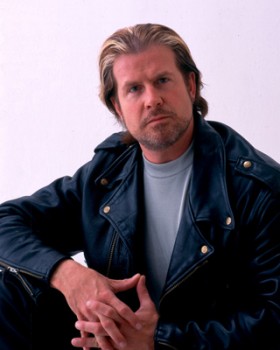
And today’s guest is no exception. She totally blows me away. Performer, director, author, artist and gallerist, the stunning Madison Young is here with us. I know; I can hardly believe it myself. She is phenomenal. To be in the presence of someone so young, so articulate and so wide open is truly refreshing. I wonder if she has any sense of how astonishing she really is. She claims to be the girl next door. And that would be true if we all lived next door to enlightenment. Hold on to your hats, my friends, you’re in for quite a ride.

Madison and I discuss:

  • Monk of TwistedMonk.com;
  • Her XXX membership website;
  • Starring in porn, directing porn and being a performance artist;
  • Working with all the big porn companies;
  • The travail of “fast food” porn;
  • The challenge of directing herself in her movies;
  • Rough queer sex;
  • Where art and sex intertwine;
  • Where she grew up;
  • Being a kinky feminist.

BE THERE OR BE SQUARE!

Look for my podcasts on iTunes. You’ll find me in the podcast section, obviously, or just search for Dr Dick Sex Advice. And don’t forget to subscribe. I wouldn’t want you to miss even one episode.

Sex Wisdom with Luc Wylder – Podcast #229 – 09/08/10

[Look for the podcast play button below.]

Hey sex fans,

The SEX WISDOM podcast series returns today with a bang. I have a remarkable guest on hand to speak to us about a wealth of topics, not least of which is his twenty-plus year career in porn. This podcast series, as you recall, brings us conversations with movers and shakers in the field of human sexuality — researchers, educators, clinicians, pundits and philosophers — all who are making news and reshaping how we look at our sexual selves.

If you know anything about pornography in general, and fetish porn in particular, you will immediately recognize the name Luc Wylder. He is a pioneer, a trendsetter, founder of the Fallen Angel brand, a performer, director and producer, the consummate male dominant and all-around wonderful guy.

I have to warn you though; today’s show is exceptionally long. It’s just that when Luc and I get to talking there is no stopping us. So kick back, put your feet up and settle in for an absorbing conversation that will provide you a unique historical perspective on the modern adult entertainment industry.

Luc and I discuss:

  • Being a pioneer in porn;
  • “The scene” in NYC in the mid 1970’s;
  • His filmography;
  • His film archive;
  • Deviant sex and the social fabric;
  • Being a parent/grandparent and being in porn;
  • Reality-based porn / the gonzo genre;
  • The diversity in his films;
  • My Dad’s Dirty Movies series;
  • Porn production and social responsibility;
  • Induction into the AVN Hall Of Fame;
  • The internet before .com;
  • The future of porn.

Luc invites you to visit him on his site HERE! And look for all his movies HERE!

BE THERE OR BE SQUARE!

Look for all my podcasts on iTunes. You’ll find me in the podcast section, obviously. Just search for Dr Dick Sex Advice. And don’t forget to subscribe. I wouldn’t want you to miss even one episode.

More of Sophia Sky – Podcast #227 – 08/18/10

[Look for the podcast play button below.]

Hey sex fans,

My friend, the exceptional educator, Sophia Sky, returns today with more of her excellent SEX WISDOM. I love talking to Sophia; she is so accessible and down to earth.  Yet her knowledge and perceptions on a wide range of topics are so insightful you can tell that they are the result of a life thoughtfully lived.

But wait, you didn’t miss Part 1 of our conversation that appeared here last week at this time, did you? Well don’t worry if ya did, because you can find it and all my podcasts in the Podcast Archive, right here on my site. Look for the site’s search function in the sidebar to your right, type in Podcast #225 and Voilà! But don’t forget the #sign when you do your search.

Sophia and I discuss:

  • Processing pain — other applications;
  • Her connection with erotic art —
  • …Modeling;
  • …Performing;
  • The Little Red Studio;
  • The Seattle Erotic Art Festival;
  • Erotic art and porn;
  • Female oriented pornography;
  • Kink, BDSM, mind games and power play;
  • Preorgasmia and masturbation;
  • Her sexual heroes.

Sophia invites you into her world HERE!

I’m taking a brief hiatus from podcasting while I work on the remodel of my websites. The next podcast will appear Monday, September 6th.

See more of Sophia at work and play.

BE THERE OR BE SQUARE!

Look for all my podcasts on iTunes. You’ll find me in the podcast section, obviously. Just search for Dr Dick Sex Advice. And don’t forget to subscribe. I wouldn’t want you to miss even one episode.